

CCTV for London Garden Squares
Garden squares combine heritage landscapes, shared governance, and public-facing boundaries. Through our GardenSqua.re brand, CCTVPro.ai has installed camera systems across numerous London garden squares.
Security Without Compromising Character
A garden square should continue to feel like a garden. We plan CCTV around the character of its railings, gates, planting and street furniture, looking for useful viewpoints that do not introduce an unnecessarily prominent security presence. Shared access points and genuine problem areas guide the design.
Suitable lamp columns, gate structures or carefully designed supports may allow cameras to sit discreetly within the landscape. Mounts and finishes are considered together, with permissions and the suitability of each attachment established before work begins. Views are checked against seasonal foliage and neighbouring properties as well as the garden itself.
Through our GardenSqua.re work, we understand the practical constraints of shared gardens and volunteer-led management. We consider how equipment will be reached for cleaning and maintenance, and how installation can be organised around gardeners, residents and events so the square remains welcoming and usable.

Sub-Surface Infrastructure Using Impact Moling
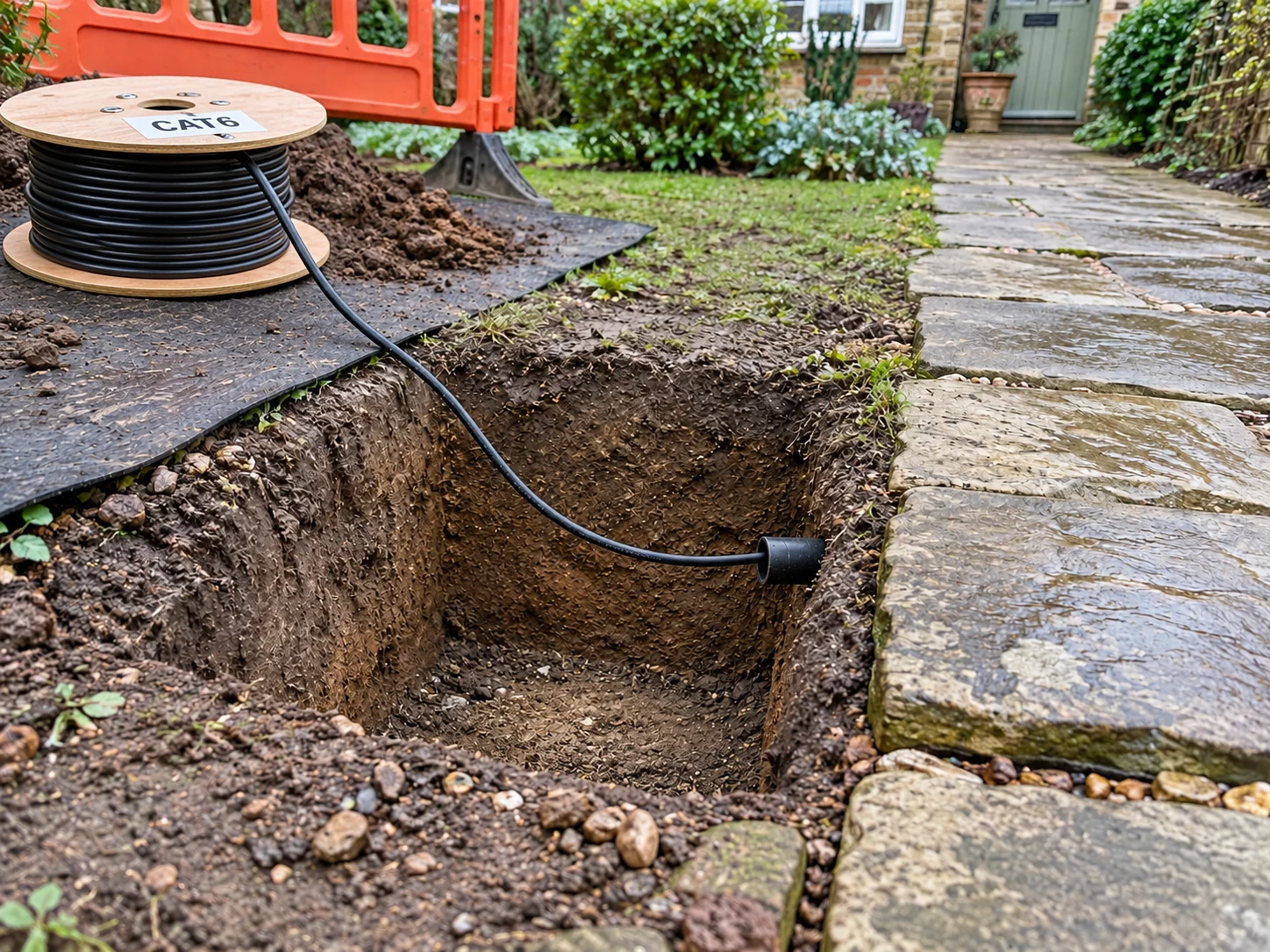
Underground routes can connect cameras and equipment without leaving visible cables across paths or planting. We first assess existing service routes and the location of power and recording equipment, then plan any additional ducts around the garden's layout and the areas that need protection.
Where suitable, impact moling can create a crossing between small access pits, reducing the need to lift an entire path or cut a continuous trench through a lawn. It is not appropriate for every location. Buried services, soil conditions, mature roots and access all influence whether and how the method can be used.
Work near trees is planned with the relevant constraints and specialist advice where needed. We agree access, protection and reinstatement arrangements with the garden's representatives, then record the installed routes. This helps future gardeners and contractors understand where the infrastructure lies and reduces avoidable disturbance during later works.
Governance-Led System Design
Garden committees and trusts need a system they can explain, operate and budget for. We start with the purpose of the cameras and the issues the garden is trying to address, then set out the proposed coverage, equipment, installation approach and ongoing costs in a form that supports informed decisions.
Operational arrangements are considered alongside the hardware. We help identify who should have access, how recording retention will be agreed and how requests for footage will be handled. Appropriate signage and clear documentation support a consistent approach, including when responsibility passes to a new committee or managing agent.
Handover covers the practical tasks authorised users are likely to need, such as finding an incident and exporting the relevant recording. We can also discuss maintenance and support arrangements so volunteers are not left guessing how to keep the system working or whom to contact when something needs attention.

AI-Driven Monitoring for Shared Spaces
CCTV should help a committee respond to incidents without asking volunteers to watch a garden all day. We configure supported detection and notification features around the square's actual use, focusing on relevant locations and times while keeping ordinary resident activity in mind.
Depending on the selected system, this may include alerts for people entering defined areas after closing or crossing an agreed boundary. Rules are tested against the site's lighting, moving branches, animals and nearby traffic. Where an alert proves unhelpful, its area, schedule or sensitivity can be reviewed instead of allowing notifications to become routine background noise.
On-premises recording provides a place to review what happened, with access restricted to the people authorised to use it. We agree a practical process for checking alerts and retrieving footage. The system supports human judgement and garden management; it does not replace either or assume that every detected event is a problem.
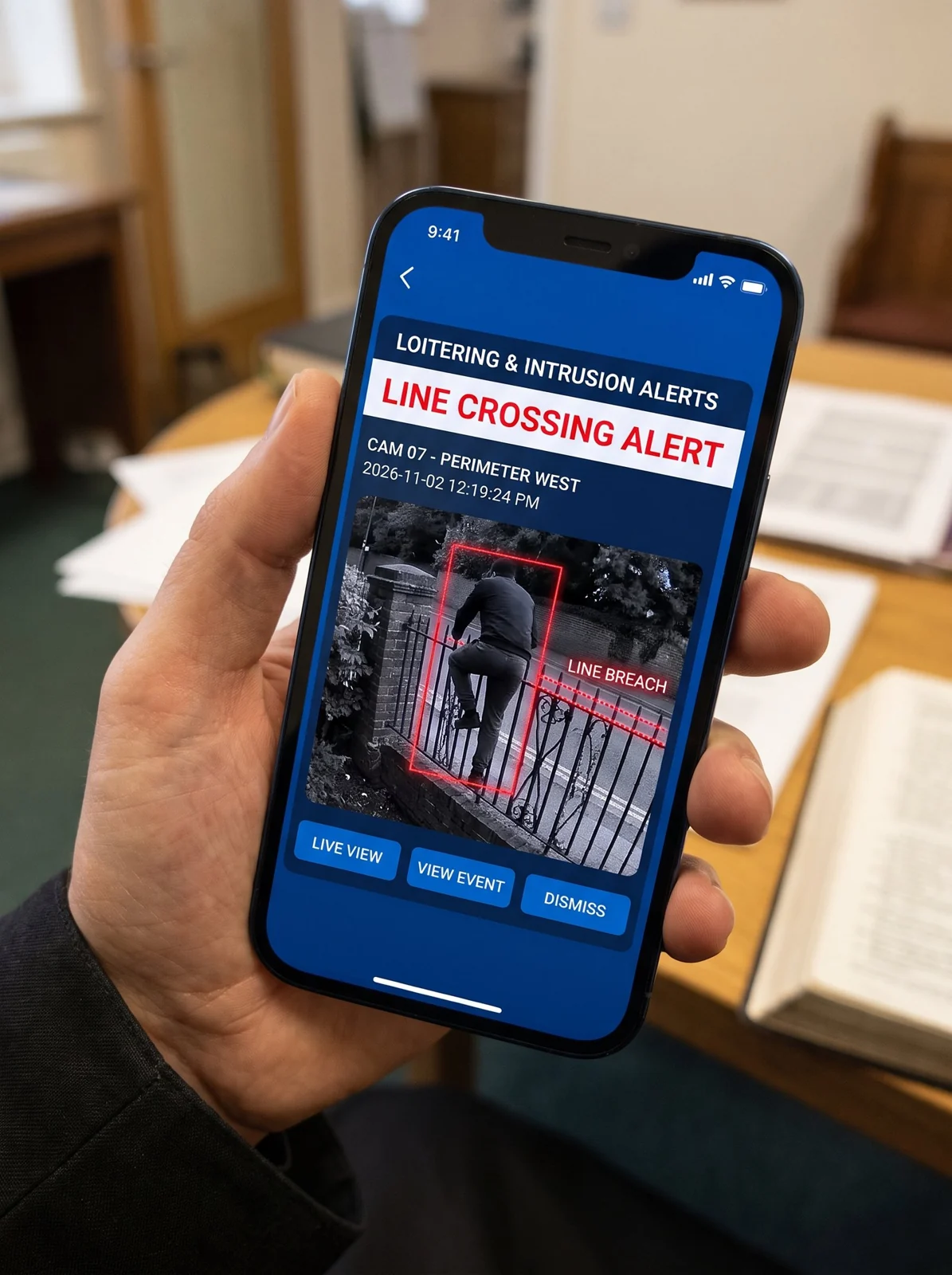
Illustrative alert for activity at a boundary; features depend on the selected system.